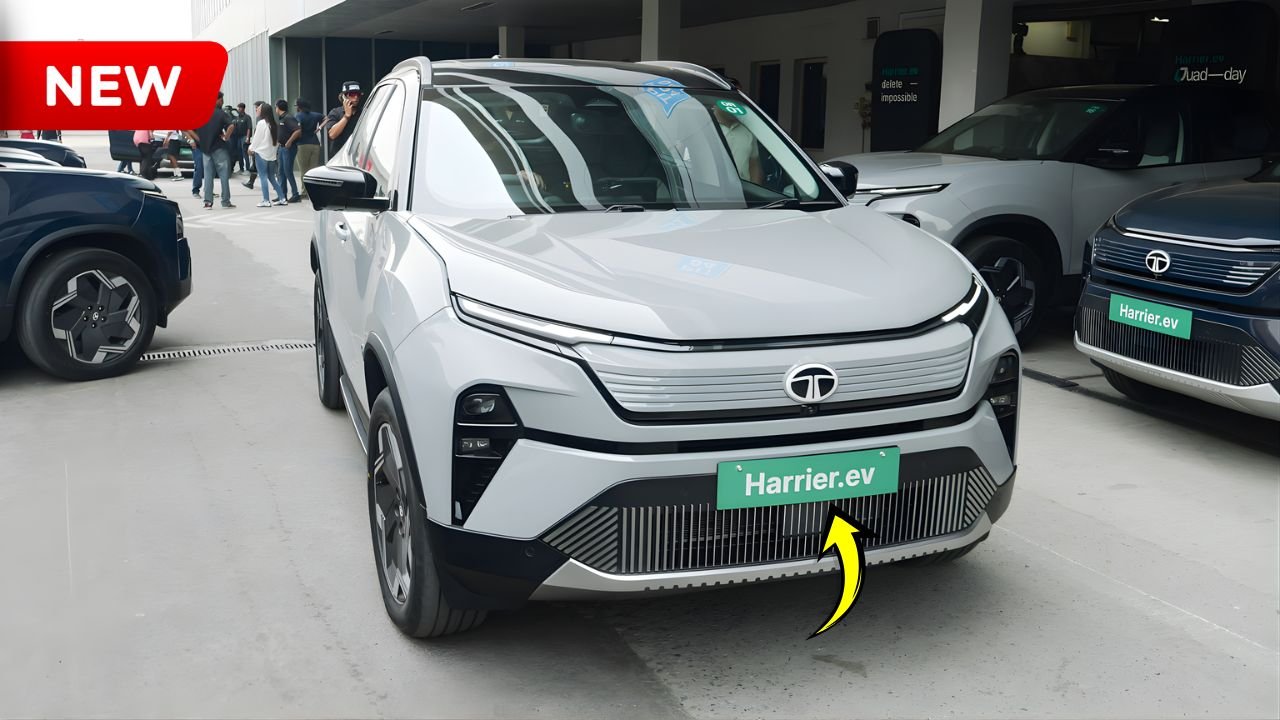
The Tata Harrier EV 2026 marks a major step in the electric vehicle strategy of Tata Motors. Built on a dedicated electric platform, the Harrier EV brings together premium SUV styling, advanced technology, and a long driving range designed for modern buyers.
The electric version of the Harrier keeps the bold SUV identity of the original model while introducing futuristic design elements and high-tech features. With a claimed 525 km driving range, the Harrier EV aims to attract customers who want a powerful electric SUV with long-distance capability and modern comfort.
Futuristic Electric SUV Design
The Tata Harrier EV 2026 features a bold design that looks both futuristic and rugged. The front fascia includes a closed EV style grille, sleek LED headlamps, and a connected lighting strip that gives the SUV a modern appearance.

From the side, the SUV retains its muscular stance with large alloy wheels and strong character lines. The rear design includes connected LED tail lamps and a redesigned bumper that enhances its premium electric SUV identity.
Powerful Electric Motor and Smooth Performance
Powering the Harrier EV is an advanced electric powertrain designed to deliver strong performance and quick acceleration. The SUV is expected to use a dual motor all wheel drive system in higher variants, providing improved traction and better driving dynamics. This setup allows the vehicle to handle different road conditions with ease.
Electric motors deliver instant torque, which means the Harrier EV provides smooth acceleration and responsive performance. This makes the SUV suitable for both city driving and highway cruising.

Long 525 Km Driving Range
One of the biggest highlights of the Tata Harrier EV 2026 is its impressive driving range of up to 525 kilometers on a single charge. This long range reduces range anxiety and allows drivers to travel long distances without frequent charging stops.
The advanced battery technology used in the Harrier EV is designed to deliver efficient power management and consistent performance. This makes the SUV suitable for both daily commuting and long road trips.
Premium Interior with Advanced Technology
Inside the cabin, the Harrier EV offers a modern and premium interior with advanced technology features. The dashboard includes a large touchscreen infotainment system along with a digital driver display. These screens provide information about navigation, vehicle performance, and battery status.

Additional features such as a panoramic sunroof, wireless smartphone connectivity, and premium audio system enhance the overall driving experience. The cabin is designed to provide both comfort and technology for modern drivers.
Advanced Safety and Smart Features
Safety remains a key focus for the Tata Harrier EV 2026. The SUV is expected to include advanced driver assistance systems such as adaptive cruise control, lane keep assist, and automatic emergency braking. These technologies help improve driver awareness and passenger safety.
Other safety features include multiple airbags, electronic stability control, and a 360-degree camera system. Together, these systems create a safer driving environment for passengers.

Price and Market Position
The Tata Harrier EV 2026 is expected to start at around ₹21.98 lakh depending on the variant and battery configuration. This pricing places the SUV in the premium electric SUV category while still remaining competitive in the growing EV market. In India, the Harrier EV will compete with electric SUVs such as the Mahindra XUV.e8 and the BYD Atto 3.
Conclusion
The Tata Harrier EV 2026 represents the future of electric SUVs from Tata Motors. With its bold design, powerful electric powertrain, long 525 km range, and advanced technology, the SUV aims to deliver a premium electric driving experience.
For buyers looking for a stylish and capable electric SUV with long range and modern features, the Harrier EV could become one of the most exciting new EV launches in India.